Identifying Middle Market Companies for Sale
Are you looking to buy a mid-sized company? The middle market is a great place to begin your search for an established business with potential for growth. But where do you start when it comes to finding middle-market companies that are for sale? In this article, we'll provide an overview of the steps you should take to find the perfect middle-market business for your investing goals.
What are Middle Market Companies?
Middle-market companies are businesses with annual revenues between $10 million and $500 million. These companies are typically privately held and have a well-established customer base and operations. They typically have a higher level of profitability than smaller businesses and are attractive to investors looking for steady returns.
Benefits of Buying Middle Market Companies
There are several advantages to buying middle-market companies. First, these businesses tend to be more stable than smaller companies as they are often more established and have a greater presence in their industry. While at the same time, these companies are less established than larger companies, so you might be able to get a good deal. Second, they typically are small family-owned businesses, so you don’t necessarily need to compete with other private equity firms in the bidding process.
What are the potential risks associated with buying a middle-market company?
One of the most significant risks to consider is the financial stability of the company you are buying. It is essential to do careful due diligence in order to get a clear picture of the company’s financials, including its liabilities and debts. This includes evaluating the company’s core business operations and the potential for future financial losses.
Another key risk to consider is the company’s management team. It is important to evaluate the management team to ensure they have the right experience and skill set to run the company effectively. Additionally, it is important to assess the company’s ability to scale and adapt to changing market conditions.
Finally, it is important to consider the potential regulatory risks associated with the purchase. This includes understanding any potential legal, environmental, and tax-related risks that could arise.
Ultimately, it is important to do your research and assess any potential risks before buying a middle-market company. Doing so will help ensure you make a sound investment decision and maximize the potential of the company you are buying. Next, we'll go through step by step how you can find middle-market businesses to buy and how to prepare everything to avoid the common pitfalls.
How to find Middle Market Businesses to buy?
Software to help you locate potential middle-market companies
If you’re looking to purchase a middle-market company, there are a few resources available to help you locate potential opportunities. One of the best places to start is a company database that includes middle-market companies and basic information about them. There are plenty of these types of databases. A few examples are Inven, Grata and Sourcescrub.
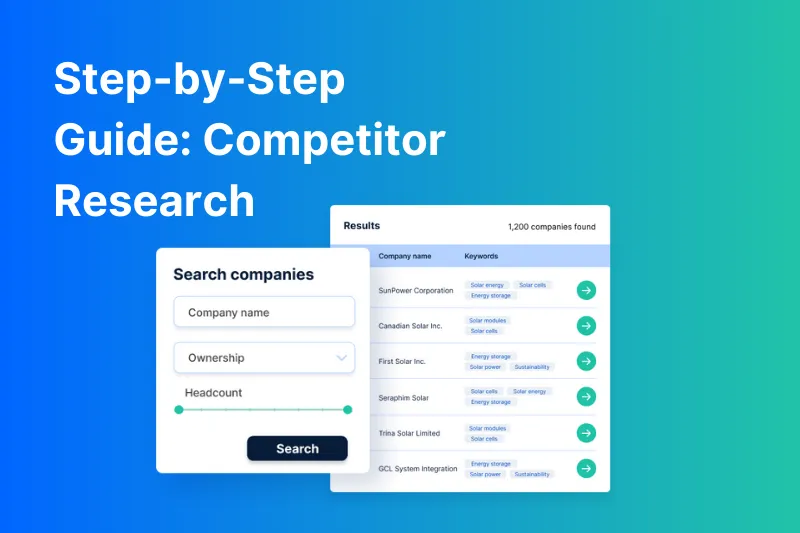
These services provide you with a search platform to find companies based on what they actually do. For example, with Inven you can just input search keywords or example companies and then get a full list of companies that match that criterion. You can also filter companies based on their size or location. Inven also provide you with contact information and financial data where applicable. This can help you save time and make sure you never miss a potential match. Gathering all this information can help you create a ranking for each company you find – and make sure you aim for the best possible deal.
Networking with Local Businesses
One way to find middle-market companies to buy is to attend networking events or business seminars that focus on mergers and acquisitions. In these, you can get information and create connections for later stages.
Connecting with Specialized Investment Bankers and Business Brokers
Additionally, you can contact private equity firms, venture capital firms, and business brokers who specialize in middle-market deals. Whichever route you choose, it’s important to do your research to ensure that you’re making the best decision for your business.
Read our tips on best deal sourcing strategies →
Analyzing the Market
Assessing the Financials of the Company
When considering a middle-market business, it is important to thoroughly analyze the financials of the company. You should look at financial statements such as the balance sheet, income statement, and cash flow statement to get an overview of the company’s financial health. The balance sheet will give you insight into the company’s assets, liabilities, and equity. The income statement will provide more detailed information on the company’s revenue, expenses, and profits. Finally, the cash flow statement provides information about the company’s cash inflows and outflows. Sometimes, these might be difficult to get. The best software out there can help you get an overview of a middle-market company's financials already when you're doing the search in the first phase.
It is also important to consider the financial ratios for the company. These ratios can help you to assess the company’s performance in relation to its industry peers. A few key ratios to consider include the current ratio, debt-to-equity ratio, debt-to-asset ratio, and return on investment (ROI). Additionally, you should look at historical financial data to get an understanding of the company’s performance over time.
Overall, it is essential to do the financial analysis properly before making a decision to acquire the business. This will help you to identify potential risks and make sure the company is a good fit for your portfolio.
To get financials, you might want to use some company registry or you can also find financial data directly from Inven. Inven has financial data of 43M+ legal entities from Belgium, Denmark, France, Germany, Ireland, Italy, Luxembourg, the Netherlands and the United Kingdom.
Analyzing the Company's Strategic Position
When analyzing the strategic position of a middle-market company, it is crucial to look at factors such as the company's industry, competitors, customers, products, and services. Additionally, you should assess the company's growth potential and its strategic positioning relative to the industry.
It might also be helpful to check if the company has experienced growth, stagnation, or a decline in performance? Additionally, you could consider how the company is positioned in relation to its industry peers and competitors and whether there is potential for growth.
When evaluating the company's strategic position, it is important to consider who owns the company and who are the people involved in the business. Who are the key decision-makers? Who are the company's customers? Who are the company's main suppliers?
Inven offers the ownership data at the same time with your search. So, when you are looking for potential middle-market companies, you can directly see their ownership already in the search results. This can save you a lot of time.
Finally, it is important to consider the company's future plans and potential for further growth. What are the company's plans for expansion? How does the company anticipate growing its customer base? What are the company's plans for developing new products or services?
By taking the time to evaluate and analyze the strategic position of a middle-market company, you can make a more informed decision about whether or not to pursue a deal. This information will help you do business valuations for them and then also make a better deal. Additionally, this can help you identify potential risks and make sure the company is a good fit for your portfolio.
C. Analyzing the Relevant Industry
As you are researching potential middle-market companies to buy, it is important to consider the industry in which the company operates. Through this you can understand the competitive landscape and identify potential areas of growth or opportunities for consolidation.
The first step is to get a clear understanding of the industry dynamics. What are the key industry trends and developments? Who are the major industry players? What are the key differentiating features of the company and its competitors? What is the size of the industry and its potential for growth?
You should also consider the competitive landscape. Who are the company's main competitors? What are the strengths and weaknesses of the company's competitors? What strategies are they deploying to gain market share? Are there any new entrants in the market?
It is also important to assess the industry's potential for future growth. What are the emerging trends in the industry? Are there any new technologies or products that could disrupt the industry? What potential opportunities does the industry offer for consolidations or acquisitions?
Finally, it is vital to consider the company's strengths and weaknesses. What are the company's core competencies? Is the company well-positioned to capitalize on emerging opportunities in the industry? Does the company have an existing customer base or a strong brand? You can use for example SWOT analysis to help you do this systematically.
By taking the time to analyze the relevant industry, you will be better positioned to make an informed decision about whether or not to pursue a potential middle-market acquisition.
IV. Making a Bid
Making a bid to buy a middle-market company can be a daunting task. It requires that you've done all the earlier listed analysis carefully and thoroughly. At this point, you should have a clear understanding of the potential middle-market companies to buy, what are their strengths and weaknesses and what are the trends for the industry.
Preparing an Offer Letter
The offer letter for a middle market company is the document that outlines the terms and conditions of the proposed acquisition. It is important to clearly state the key terms of the agreement, such as the purchase price, financing structure, and any post-closing adjustments. It is also important to include any contingencies, such as due diligence and regulatory approvals.
When preparing an offer letter, it is important to be as specific as possible. Make sure that you include the following:
- The purchase price: The offer letter should include the amount of money that you are willing to pay for the company.
- Financing structure: If you are financing the purchase, the offer letter should include details on the terms of the loan.
- Post-closing adjustments: This should describe any financial adjustments that will be made after the sale closes.
- Contingencies: Make sure to include any conditions that must be met before the sale can close, such as regulatory approvals and due diligence.
- Indemnification: This should outline any potential liabilities the buyer may be responsible for in the event of a breach of contract.
By taking the time to prepare a detailed and thorough offer letter, you can ensure that you are making an informed decision when making a bid to buy a middle-market company.
Performing Due Diligence
Due diligence is an important part of the process when buying a middle-market company. It is a process of research and verification to ensure that all the information provided by the seller is accurate and up to date. It is also an important step in protecting your interests as the buyer and ensuring that you are making the most informed decision possible.
When performing due diligence on a potential middle-market company, there are a few key steps to take:
- Research: Research the company’s background, management team, financials, industry trends, customer base, and more.
- Verify: Verify the accuracy of the data and information provided by the seller.
- Analyze: Analyze the data to uncover any potential risks associated with the acquisition.
- Negotiate: Negotiate the terms of the acquisition to ensure that you are getting the best deal possible.
- Finalize: Finalize the deal and close the transaction.
By taking the time to perform due diligence when buying a middle-market company, you can ensure that you are making a well-informed decision and protecting your interests as a buyer.
Negotiating the Terms of the Acquisition
It can't be highlighted enough how important it is to negotiate the terms and conditions associated with the transaction. This will ensure that you are making the best decision and getting the most out of the purchase. This process might take a while but it can be detrimental to how you succeed.
Conclusion
In conclusion, buying a middle-market company can be a complex process, but with the right preparation and due diligence, it can also be a rewarding and profitable endeavor. Before making an offer, it is important to understand all the details of the transaction, including the financial adjustments that will be made after the sale closes, any contingencies that must be met, and any liabilities that the buyer may be responsible for. Additionally, it is important to take the time to do thorough due diligence on the company, researching, verifying, and analyzing the data to uncover any potential risks associated with the acquisition. Finally, it is essential to negotiate the terms of the acquisition to ensure that you are getting the best deal possible. By following these steps, you can ensure that you are making an informed and profitable decision when buying a middle-market company.
Final Considerations for Finding and Acquiring a Company
- Set a budget: Before you start searching for a company, set a budget and determine how much you are willing to spend. This will help you narrow down your list of potential targets.
- Look for the right fit: When looking for a company to buy, look for one that fits your goals, objectives, and strategy. Make sure the company has a solid track record of success and a strong customer base.
- Research: Conduct thorough research on the company and the industry to understand the risks and rewards associated with the acquisition.
- Verify: Verify the accuracy of the information provided by the seller.
- Analyze: Analyze the data to uncover any potential risks associated with the acquisition.
- Negotiate: Negotiate the terms of the acquisition to ensure that you are getting the best deal possible.
- Finalize: Finalize the deal and close the transaction.
Let Inven help you find all the potential middle-market companies
Inven is a software specialized to find middle-market companies. With the software, you can easily find companies based on what they actually do. You just need to input 1-3 example companies or keywords and filter based on location and headcount. Feel free to book a demo if you're interested to try it out!
See the full private market
1,000+ M&A teams use Inven to find the companies others miss.

Join 1,000+ M&A teams using Inven to map markets faster, find the companies others miss, and build defensible outputs across 28M+ companies.
.webp)