
The origination stack banks compare in 2026 is Inven, PitchBook, Capital IQ, Cyndx, Gain.pro, Grata, SourceScrub, and Valu8. Compare coverage, one-pagers, and when each one fits.
Last updated August 2026.
The origination stack investment banks compare in 2026 is Inven, PitchBook, S&P Capital IQ, Cyndx, Gain.pro, Grata, SourceScrub, and Valu8. Inven produces buyer lists, market maps, and company one-pagers in the firm's own PowerPoint template from data it owns on 28M+ companies. PitchBook and Capital IQ remain the standards for comps and valuation. Grata and SourceScrub cover US mid-market web data, and Gain.pro and Valu8 cover European financials.
A deal origination platform, in plain terms, is the tool a bank runs itself to keep its universe of buyers and targets current and to feed its pitch materials — as opposed to an origination service firm, which is an outsourced desk. The rest of this page compares the eight tools on coverage, output, and price.
What is investment banking deal origination?
Origination is the work of getting to qualified buyers and targets early enough to win the mandate: the buyer list on a sell-side, the coverage universe on a buy-side. The tools in this comparison centralize company and ownership data so that work does not start from a blank spreadsheet, and some apply AI to keep the records current and the deliverables moving. The mandate-winning logic has not changed — the bank that shows up with the credible list and the finished materials wins — and the pages below sort the tools by which part of that they actually produce. For comps and valuation, PitchBook and Capital IQ remain the reference points throughout.
Which origination platform fits which job?
The same eight, and none of them does every job.
| Platform | Coverage | Origination fit | When to choose |
|---|---|---|---|
| Inven | 28M+ companies, 430M+ contacts (Inven product data, August 2026) | Buy-side and sell-side work in fragmented private markets | When the deliverable is the buyer list, the market map, or the one-pager in the firm's own PowerPoint template, produced as a saved task the team reruns |
| PitchBook | 3M+ companies, transaction-centered | Comps, valuations, and fund data | When deal histories and Excel-led comps work lead the engagement |
| S&P Capital IQ | Public companies and filings | Modeling and public comps | When the work is models and a full public comparable set |
| Cyndx | Smaller universe, relationship-mapped | Investor and acquirer matching | When the job is pairings rather than mapping a vertical |
| Gain.pro | European private companies | Filings-backed European financials | When the mandate is European buyout or add-on work |
| Grata | US mid-market website profiles; part of Datasite since June 2025 | Website-based discovery inside Datasite | When website search and the Datasite workflow are the requirement |
| SourceScrub | US events and directories; acquired by Datasite in August 2025 | Event-driven outbound lists | When conference and directory coverage of US founder-owned businesses is the gap |
| Valu8 | Nordic and European registry data | Registry-verified SMB financials | When Nordic or European filings-backed figures lead the work |
1. Inven
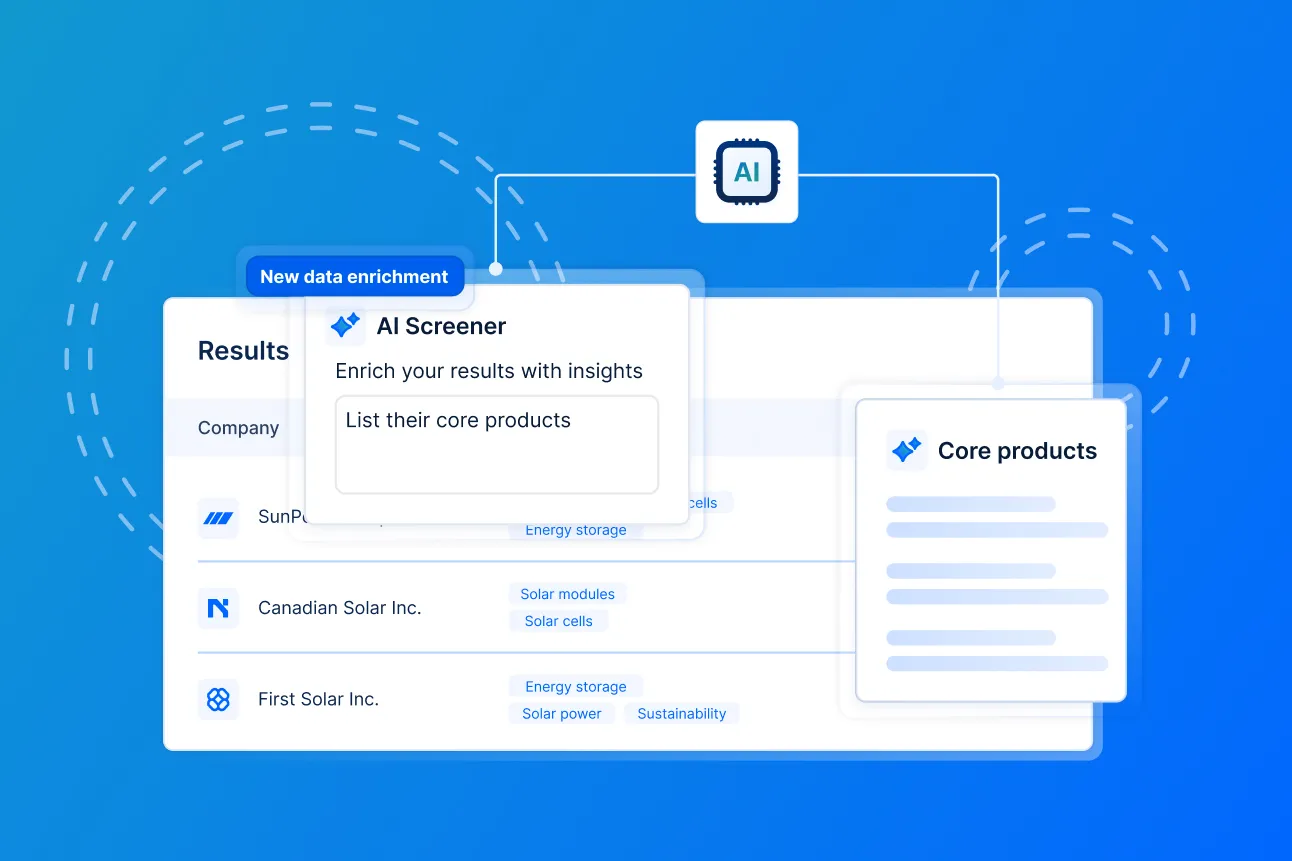
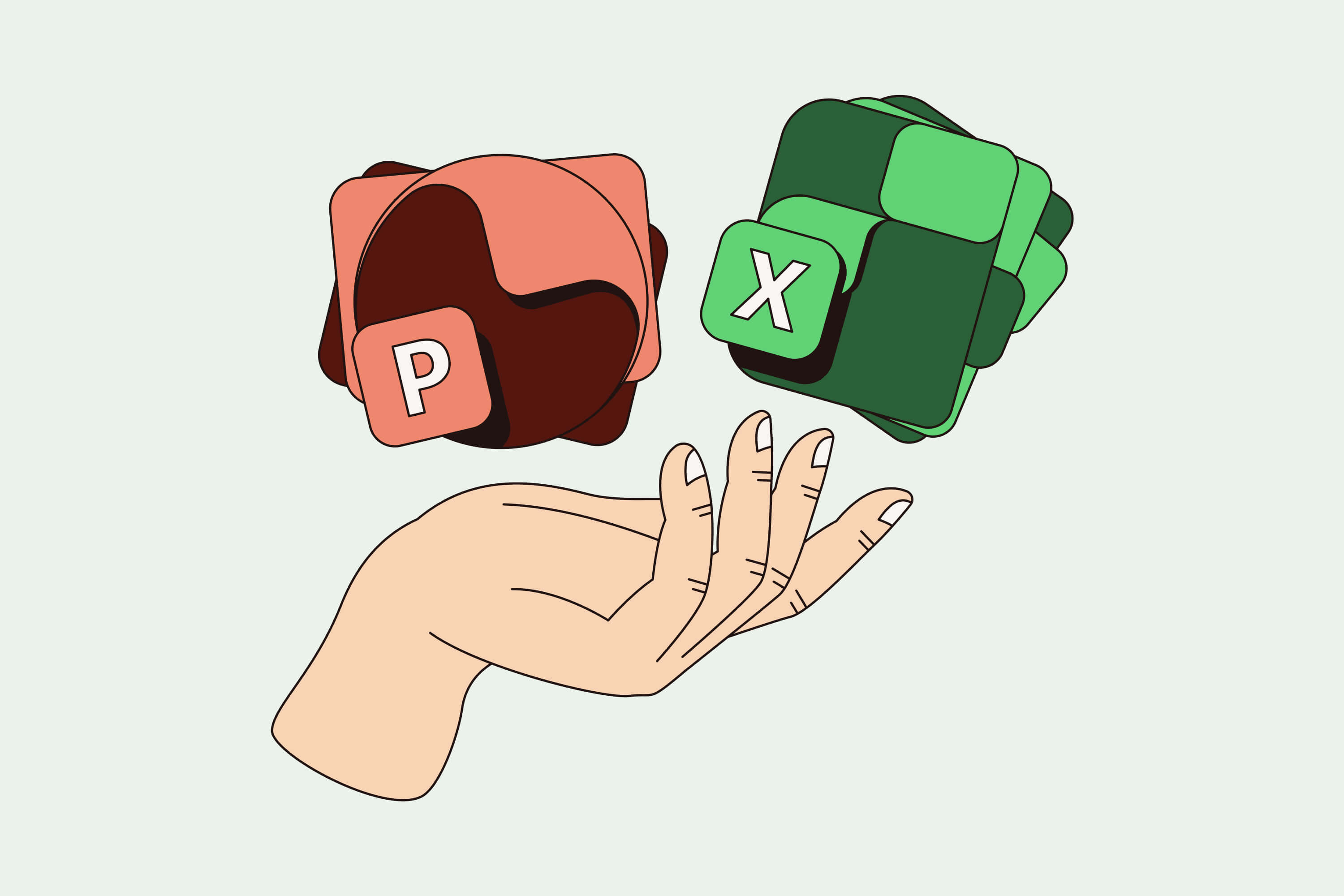
Inven's job in this stack is the deliverable. It produces company one-pagers and overview slides in the firm's own PowerPoint template, and it runs saved M&A workflows — buyer lists, market maps, comps, and watchlist refreshes — from data it owns: 28M+ companies with 430M+ professional and owner contacts on the records (Inven product data, August 2026). You describe the work once, the way you would brief a colleague, and the records that come back carry ownership, funding, revenue signals, and verified contacts; the one-pager and the overview slides come out of the same task, in the firm's template, rather than being rebuilt by hand afterward. The data is native, collected and maintained by Inven rather than licensed from the terminals, which is why the same task holds up in the fragmented private markets where most sell-side buyer lists actually get built.
Strengths: private-market coverage depth, contacts on the record, exports and CRM connectivity, global reach, and output that arrives formatted. More than 1,000 investment banks, private equity firms, consultancies, and corporate development teams use it, and Lexar Partners reports building buyer lists ten times faster.
Limitations: it is not a public-markets modeling or macro tool — keep PitchBook and Capital IQ for comps and valuation, and Gain.pro for analyst-verified European depth. Inven is not the world's best contact-data provider. For that, there are better tools.
Pricing: custom subscription. Book a demo to see it on a live mandate.
2. PitchBook
PitchBook is the transaction reference: deal histories, valuations, investors, and fund data on 3M+ companies, concentrated on names that have raised or transacted, in the Excel-led workflows PE and IB teams already run. Keep it when comps and deal validation lead the engagement; it is thinner as a way into companies that have never appeared on a deal tape. Pricing reports cluster around the mid-$20K range per year (public sources, August 2026). See the full Inven vs PitchBook comparison.
3. S&P Capital IQ
Capital IQ is the modeling terminal: public company data, filings, estimates, and the Excel plugin that valuation work runs through. Keep it for models and public comps. Its coverage of companies below roughly $50M in revenue is limited, which is exactly where much origination work lives. Pricing is reported from about $25K per user per year (public sources, August 2026).
4. Cyndx
Cyndx matches investors, buyers, and private companies by growth profile, funding stage, and keywords, mapping relationships across sectors. Keep it when the job is likely pairings; its company universe is smaller than the broad private datasets, so it is a weak fit for mapping a full vertical. Pricing is typically mid-five figures per year (public sources, August 2026).
5. Gain.pro
Gain.pro is European private market research: filings, financial statements, ownership, and estimated financials for lower- and mid-market buyout work. Keep it when the mandate is European and needs filings-backed financials; a US-heavy or global mandate needs another source. Pricing is reported at low-to-mid five figures per year (user reports, August 2026).
6. Grata
Grata builds US mid-market company profiles from websites with machine learning on top, and has been part of Datasite since June 2025. Keep it when website-based discovery and the Datasite workflow are the requirement. Enrichment is manual on request, with updates taking one to three days, and coverage is US-centric. Pricing is often cited from around $15K per year (public sources, August 2026). See the full Inven vs Grata comparison.
7. SourceScrub
SourceScrub compiles US company data from events, directories, and networks, with a bias toward founder-owned businesses — the tool for event-driven outbound lists. Datasite acquired it in August 2025, two months after Grata, and is integrating the two. Keep it for US conference and directory coverage. Pricing is typically low five figures per user annually (public sources, August 2026). See the full Inven vs SourceScrub comparison.
8. Valu8
Valu8 covers Nordic and European SMBs from registry data: verified ownership, financials, and transactions drawn from official filings. Keep it when registry-backed figures lead the work in its regions. Its automation is limited, so producing a market-wide deliverable from it remains manual. Pricing is custom.
How do investment banks use deal origination platforms?
Four jobs come up on nearly every mandate: identifying potential sellers for buy-side clients, building buyer lists for sell-side processes, benchmarking multiples against comparable transactions, and dropping company data into pitch materials. The stack exists so that all four run as ongoing mandate coverage rather than one-off searches — the universe stays current between engagements, and the materials draw from it instead of from last quarter's spreadsheet.
How do investment banks use AI for deal origination?
Mostly to do at scale what associates used to do by hand: interpreting websites and filings to keep company records current, so the universe does not go stale between mandates. In Inven's case, the AI runs saved tasks — you describe the work in plain English once, and the task produces the deliverable, whether that is the buyer list, the market map, or the one-pager in the firm's template, the same way each time it is rerun. None of this touches the comps and valuation work, where PitchBook and Capital IQ remain the tools; the AI sits in front of that work, producing the materials that lead up to it.
What should you evaluate in a deal origination platform?
Coverage in the markets your mandates actually run through, search precise enough to respect a real brief, ownership and contacts on the same record — Inven carries 430M+ verified contacts — and CRM connectivity so lists land in the pipeline rather than in a download folder. Above all, look at the output: if what comes back has to be rewritten and reformatted before a partner sees it, the tool has only moved the work, not removed it.
The practical test is to bring a live brief and judge what comes back: whether the buyer universe is one you would actually run, and whether the page comes out in the house template ready to use. Banks already running PitchBook or Capital IQ should keep them — Inven expands private-market coverage and takes over producing the deliverables; it does not replace the comps.
How much do deal origination platforms cost?
Most of these price per user per year, running from a few thousand to tens of thousands of dollars, with enterprise agreements sometimes reaching into the hundreds of thousands (public and user-reported figures, August 2026). The figures in each product section above are the ranges publicly reported as of August 2026; actual contracts vary by seats and modules. Inven quotes custom pricing — book a demo for a number based on your team.
See the full private market
1,000+ M&A teams use Inven to find the companies others miss.
Join 1,000+ M&A teams using Inven analyze entire markets and build polished deliverables — backed by private market data.
Frequently asked questions
What is a deal origination platform?
The tool a bank runs itself to keep a current universe of buyers and targets and to produce the materials a mandate needs — as distinct from an origination service firm, which is an outsourced desk doing that work for a fee. The platforms compared here are tools; the bank's own team runs them.
What are the best deal origination platforms for investment banks?
Inven, PitchBook, S&P Capital IQ, Cyndx, Gain.pro, Grata, SourceScrub, and Valu8. Inven produces the deliverables — buyer lists, market maps, and one-pagers in the firm's own PowerPoint template — from data it owns. PitchBook and Capital IQ cover comps and valuation, Cyndx investor matching, Gain.pro and Valu8 European financials, and Grata and SourceScrub US mid-market web and event data.
How is Inven different from PitchBook for origination?
They hold different ends of the mandate. PitchBook is the transaction reference — deal histories, valuations, and fund data on companies that have raised or transacted. Inven works from its own data on 28M+ companies, including the never-funded private markets where buyer lists get built, and its output is the deliverable: the list, the map, or the page in the firm's template. Most banks that weigh them end up running both.
Do origination platforms replace PitchBook or Capital IQ?
No. Comps, valuation, and public filings stay on the terminals, and nothing in this comparison does that work better. What a tool like Inven replaces is the manual assembly around them — the buyer lists, market maps, and one-pagers that used to be stitched together by hand before the modeling starts.
Why do banks use Inven for origination?
Because the bottleneck on most mandates is the deliverable, not the data lookup. Inven's saved tasks produce the buyer list, the market map, and the one-pager in the firm's own PowerPoint template from data it owns — rerun by anyone on the team, on the next mandate, in the same format. The time that used to go into assembling those materials goes back into the engagement.
How much does Inven cost?
Pricing is a custom subscription based on team size and use. Book a demo and ask for a quote against a live mandate — that also settles the more useful question of what the output looks like in your own template.
Lorem ipsum dolor sit amet, consectetur adipiscing elit, sed do eiusmod tempor incididunt ut labore et dolore magna aliqua. Ut enim ad minim veniam, quis nostrud exercitation ullamco laboris nisi ut aliquip ex ea commodo consequat. Duis aute irure dolor in reprehenderit in voluptate velit esse cillum dolore eu fugiat nulla pariatur.