%20(1)-2.jpg)

What does it take to scale an AI-native product to 1,000 customers in three years? Discussing the product decisions, customer feedback, and trade-offs that shaped Inven’s journey.
What 1,000 customers taught us about building an AI-native platform for M&A
The journey to 1,000 customers taught us more than any roadmap ever could.
Early on, I believed it might be possible to know every customer personally, and for a long time, that was true.
Reaching 1,000 customers showed us that staying close to customers mattered. The product now has to carry that understanding at scale, using what we learn to shape how Inven works.
This year also marked a shift for the company: we closed our Series A, expanded the team, rebuilt core parts of the product, and continued building more deeply into real M&A workflows.
We started Inven because finding and understanding private companies, especially in the mid-market, was far harder than it should have been. The work was manual, slow, and repetitive. We believed it could be faster and better, so we set out to build a better way.
Over time, a handful of early decisions ended up shaping everything that followed, not through a strict roadmap, but through how we worked, what we prioritized, and how quickly we learned.

A product built through three different ways of thinking
Inven didn’t start with just one founder and a vision.
In the earliest days, much of the planning happened on long walks, a shared habit me and Tommi had together.
Those walks were a place to test ideas, challenge each other, and decide what was worth building. Amongst other ideas, the earliest version of Inven was also shaped during one of those walks.
Those “founder walks” quickly became one of our most productive ways to think, and they’re a habit we still rely on today.
What matters most in a co-founder team isn’t prior experience or identical skills. It’s having complementary instincts, trust, and a shared commitment to solving the problem – combined with a willingness to learn quickly.
That learning speed showed up in very concrete ways. Tommi (co-founder, CPO) stepped into areas the product demanded and built the deep technical expertise needed to move us forward. Not everyone can make that kind of shift, and it says a lot about the ownership and learning speed that shaped Inven early on.
As the company grew, Ekku (co-founder, CTO) consistently took on the hardest technical challenges and learned whatever was needed to solve them. Work often ran late, and when the metro stopped running after midnight, we paid for Ekku’s taxi home so he could keep going.
Why speed became a product decision
From day one, we focused on understanding what truly slowed deal teams down, and fixing those problems quickly. A big part of that came from how we thought about building in an AI-driven world.
When you’re building a technical backbone, you’re always building with what’s available today. With AI, that matters even more. The space moves too fast to wait for version 2.0 or 3.0. You have to build, ship, and learn with the tools that exist now, always knowing they’ll be replaced, improved, or rewritten along the way.
"The space moves too fast to wait for version 2.0 or 3.0. You have to build, ship, and learn with the tools that exist now, always knowing they’ll be replaced, improved, or rewritten along the way."
That mindset shaped how we worked across the board.
We built fast, tested constantly, and doubled down on what actually worked in the product, in go-to-market, and in how we communicated. We didn’t chase industry hype for its own sake. Everything was measured, challenged, and refined.
It’s also a key reason we reached 1,000 customers so quickly. When you remove real friction from a high-velocity process, the market responds, and expectations change. What used to take days now takes minutes, and teams start operating with a completely different sense of speed.
Trusting instinct when customers don’t have the words yet
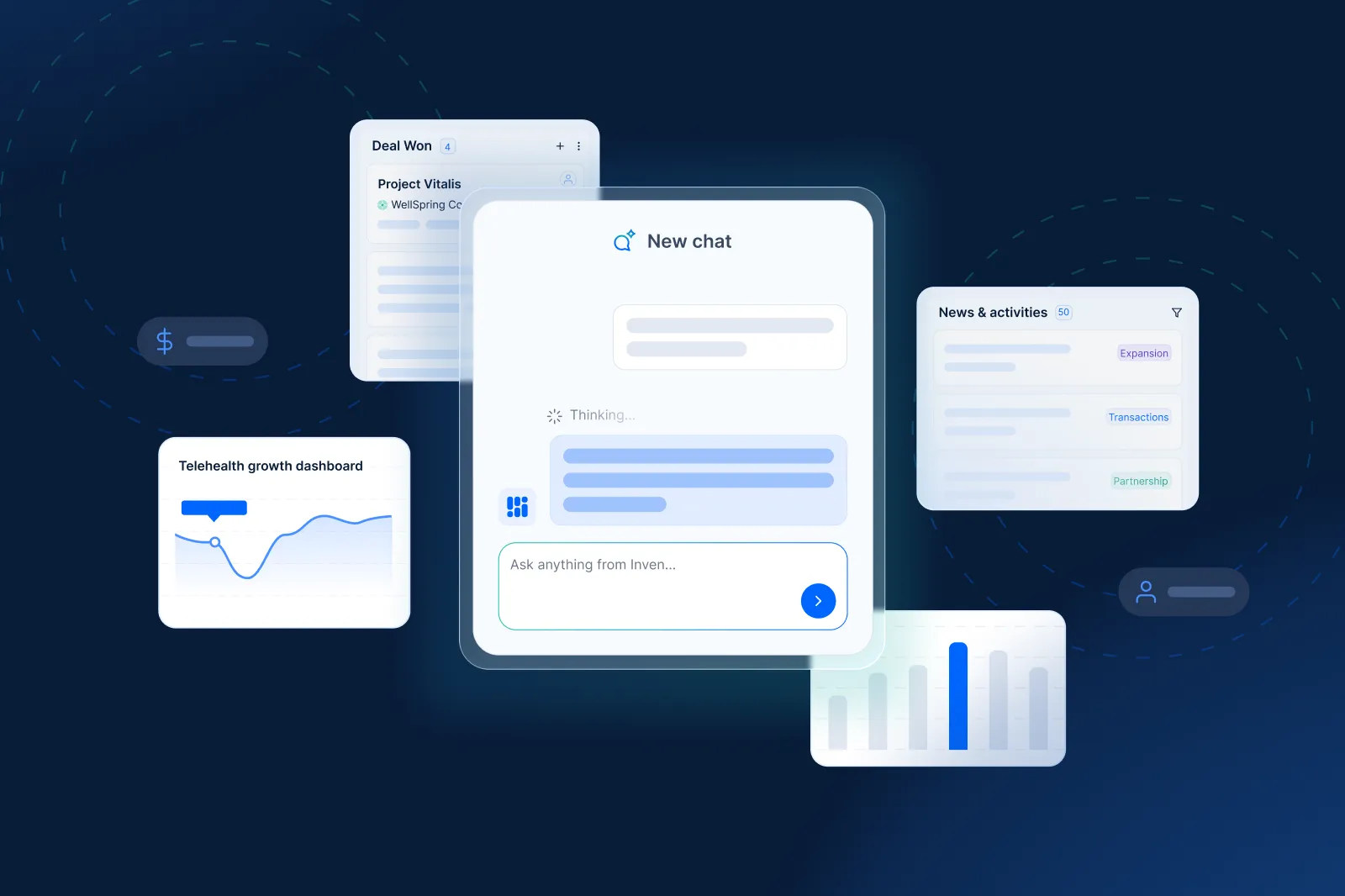
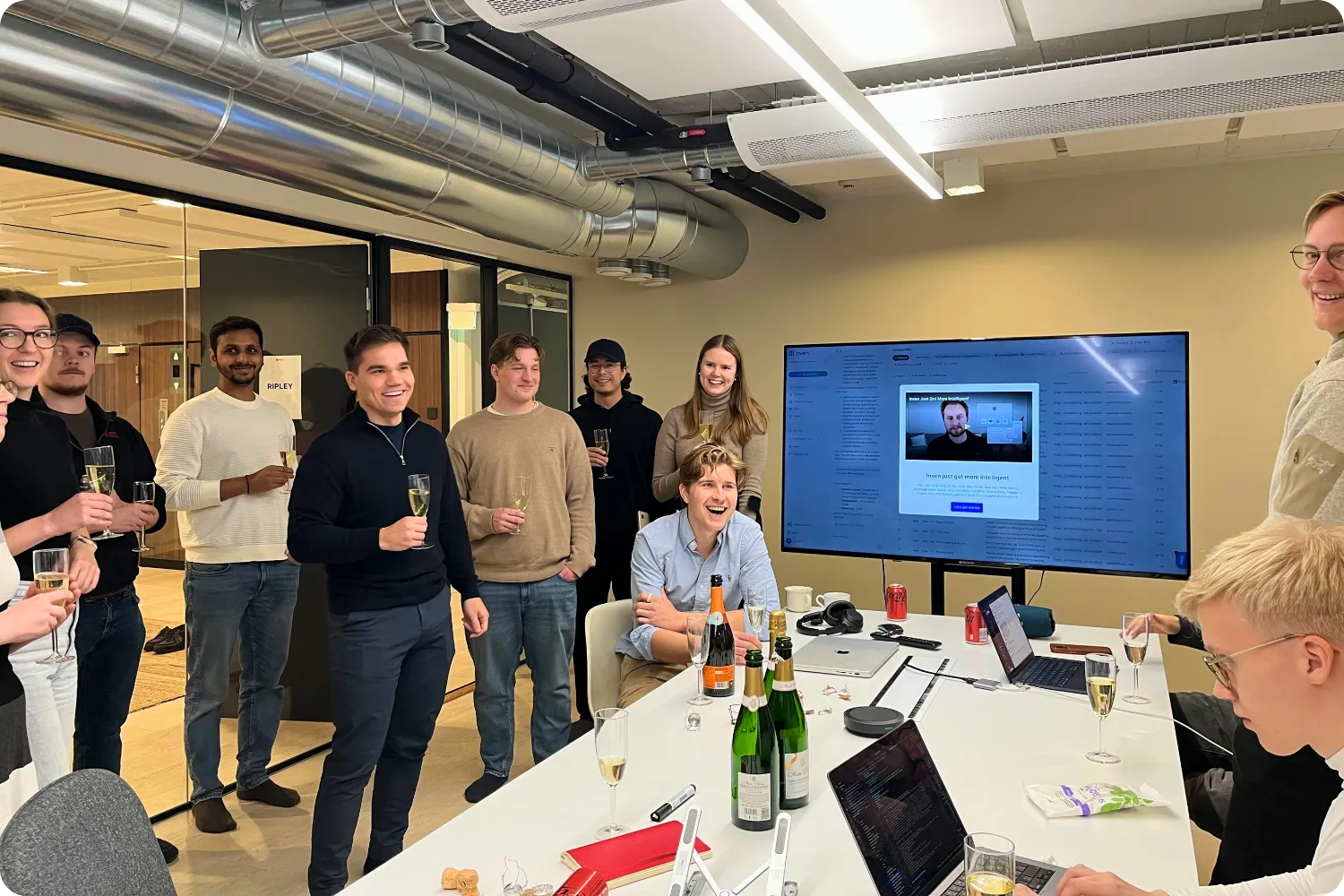
Some of the most important steps in the product came from moments that no customer explicitly asked for – including the new chat-based UI.
It began as a simple question: Why are we making users click through filters when they could just describe what they want?
In all honesty, it was purely a hunch shaped by how we used the product ourselves. But once teams saw it, it quickly became one of the most impactful updates we’ve shipped.
That experience reinforced something we now consider core to how we build: customers are very good at describing their pain, but not always the solutions. Our responsibility is to solve the problems by seeing a little further ahead.
A culture based on clarity and ownership
None of this would have worked without the team around us, the people who joined because they wanted to solve difficult problems with focus and speed. We early on made a choice to form a team where ownership, collaboration, and ambition came first.
What defines Inven isn’t the hours, but the drive behind them. The team moves quickly because they care about the product and want to see it improve every week. That mindset has shaped how we build and how fast we’ve been able to move.
Our team is the reason we’ve come this far: a group that takes responsibility, works closely together, and pushes the product forward with consistency. That community has been one of our biggest advantages as we’ve scaled.
Staying focused on what makes the product essential
We designed Inven around accuracy, speed, and simplicity. We’ve protected those pillars from the beginning.
Instead of expanding too broadly, too early, we focused on the core experience of:
→ finding the right companies
→ understanding them in depth
→ removing unnecessary steps
→ helping teams move from thesis to outreach quickly
Everything else grew out of that foundation.
As the product has matured, we’ve expanded into new parts of the workflow, but always with the same principle: build what improves speed, accuracy, or clarity for deal teams.
Where we go from here
The way deal teams work is changing quickly. AI-native sourcing is becoming standard. Some data is increasingly global, while much of the most valuable information still lives in fragmented local databases. Teams need tools that surface insight early, accurately, and without errors.
Reaching 1,000 customers tells us one thing clearly: the industry was ready for this shift. We’ve also seen strong signals that the market is responding to what we’re building:
- Inven was awarded AI Company of the Year for our work in transforming how M&A teams source and understand private companies.
- We were also ranked #10 on Sifted’s Future 50, highlighting Europe’s fastest-growing early-stage companies.
- More recently, Inven has earned top recognition on G2, including being named Momentum Leader in Financial Research Software and receiving leading placements across multiple categories such as Easiest to Use, Easiest Setup, Users Most Likely to Recommend, and Market Intelligence.
The next phase is about building even more deeply into that future. More intelligence, more precision, more automation, and more clarity for deal teams across the globe.
We’re building Inven to become the go-to AI platform that powers the work of all M&A professionals, and we’re grateful to everyone who has been part of this journey so far.
The first 1,000 customers shaped Inven.
The next 1,000 will challenge us to build something even better.
About Inven
Inven makes private markets visible. Purpose-built for M&A, Inven helps the world's top dealmakers map entire sectors across 28M+ companies, find the targets others miss, and deliver decision-ready outputs — in minutes. Founded in 2022 and headquartered in Helsinki, Inven is the default AI for M&A research.
Inven is trusted by more than 1,000 investment banks, private equity firms, consultancies, and corporate development teams.
For more information, please visit https://www.inven.ai/.
See the full private market
1,000+ M&A teams use Inven to find the companies others miss.
Join 1,000+ M&A teams using Inven analyze entire markets and build polished deliverables — backed by private market data.